
Call us today on 07562706560

Twitter Feed Popout byInfofru

  • Standard wheels tend to come with few options, however there are several things to consider.
    • Every wheelchair should have a cushion.  A very basic cushion should be considered a minimum to provide some comfort and pressure relief. 
    • Seat size. Ensure an appropriate seat size.  There shouldn't be much space between the user's hips and the sides or armrests of the wheelchair.  There should be 1-2" space between the back of their knee and the front of the cushion.
    • Backrest height. The backrest should be sufficiently high to prevent the user leaning backwards over the top of the backrest upholstery.
    • Anti-tips. These are two small wheels that protrude close to the ground from the back of the wheelchair.  They prevent the wheelchair tipping over backwards.  This is especially important if the wheelchair is to be used on slopes or if there is any other reason why the wheelchair should be more unstable than normal, such as leg amputees.
    • Headrests allow the head to be supported, especially when using backrest recline. When reclined, the users head is likely to fall backward with gravity, therefore it is important to support it in a comfortable position.
    • Headrests also provide some safety when travelling in a vehicle whilst seated in the wheelchair, in a similar way the headrest of a standard car seat would do. It is important to note that a wheelchair headrest is not tested to the same criteria as a car seat headrest would.
    • Some users require additional head support to maintain an upright head position, or to maintain their head in a comfortable position. Additional supports and shaping can be added to tailor the support offered by the headrest.

active user wheelchair


Active user wheelchairs are manufactured for self-propelling. Because of this, active user wheelchairs are usually designed to be lightweight or use an efficient configuration for self-propelling.

Reducing the weight of an active user wheelchair is generally achieved by using less material. For example, many active user wheelchairs have a rigid, non-folding design. This is because a folding mechanism uses a lot of additional frame material, so rigid chairs tend to be lighter. Another option is to use a lightweight material like aluminium, titanium or carbon fibre to construct the frame of the wheelchair, rather than steel. Minimising the presence or weight of any accessories such as push handles, tool kits and back packs also reduces the weight of the chair as a whole.


Active User Wheelchair Features

There are many ways in which an active user wheelchair can be configured to make it efficient, or easier to self-propel. As described above, being lightweight will help with increasing the efficiency of an active user wheelchair, but there are many other considerations:

  • Narrow seat size. Having a seat width that is too wide means that excessive shoulder movement is required when self-propelling. A narrow seat width means the wheels are as close as possible, allowing the shoulders to move in their strongest, most efficient position.
  • Ideal centre of gravity. Many active user wheelchairs have forward-backward adjustment of the rear wheel position, or can be built with a specific position. It is essential for most active user wheelchairs to have more weight distribution over the rear wheels, than the front casters. The rear wheels are larger, have a larger tyre and therefore roll with less resistance. By moving the position of the rear wheels forward on the frame of the wheelchair, the wheelchair becomes more efficient to roll and to self-propel.  This forward position of the rear wheels has the added benefit of improving the position of the shoulders. They can move with greater strength and efficiency.
  • Adjustable seat height. Many active user chairs can be adjusted or configured with specific front and rear seat heights. The rear seat height determines the height of the shoulders above the rear wheels. If the rear seat height is too great, the user is required to straighten their elbows more to reach the rear wheels, reducing the strength and efficiency of the arm and shoulder when self-propelling.
  • Ideal backrest height. Excessive height of the backrest restricts movement of the back and shoulders when self-propelling. However, backrest height is important in creating a stable sitting position. Therefore if the backrest is not high enough, self-propelling efficiency is likely to be compromised.
  • Specialised brakes. Standard brakes are positioned to be easy to operate and close to the tyre. During forceful self-propelling, the thumb of the user can contact the brake, resulting in injury. Many active user wheelchairs are therefore fitted with brakes that fold away from the tyre when not in use.
  • Strong, lightweight wheels. The wheels transfer energy from the user into movement of the wheelchair, therefore they are important in maintaining efficiency of the wheelchair. A well-built, lightweight but strong wheel will transfer a greater proportion of energy than a poorly made, heavy wheel. Being the widest part of a wheelchair, they need to be able to deal with knocks. A strong wheel will be able to deal with those knocks, when they are attached to the wheelchair and when they're not.


Active User Wheelchairs - Pneumatic or Solid Tyres?

The major decision when it comes to tyres is between pneumatic and solid tyres. Pneumatic (air-filled) tyres tend to be lighter than solid tyres.  They also have significantly less rolling resistance, making self-propelling much less difficult. The downside with pneumatic tyres is there possibility of puncturing. This likelihood can be reduced with thicker tyre tread, good maintenance, liquid infills inside the tube and avoiding certain places where puncture might be likely.  Learning to replace a tube or having someone else that can do this can be a very useful skill.


Choosing an Active User Wheelchair

Choosing an active user wheelchair can be challenging when there are so many different features to consider. If you’re looking for expert advice on choosing an active user wheelchair, then contact Silver Fern Therapy today to arrange a wheelchair fitting.

wheelchair-types

This quick overview of the different types of wheelchairs can help you understand what’s available on the market. If you’re looking to learn more about wheelchairs, then this is a great place to start! For more details about any of these wheelchair types, feel free to contact us.


Contents


Types of Wheelchair


Standard Wheelchair
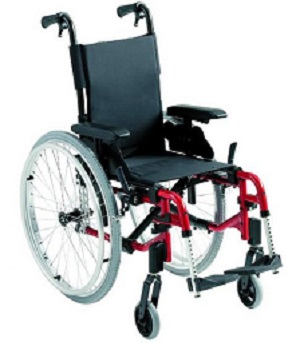
 

wheelchair types: standard wheelchairs

Standard wheelchairs are typically used by people for occasional use. They come in a range of sizes, but their configuration is often limited.  Standard wheelchairs almost always fold for storage. Most standard wheelchairs will have a transit option with small rear wheels, designed for the wheelchair user to be pushed by someone else. They will typically have a self-propelling option as well, with large rear wheels, designed for the wheelchair user to propel themselves, using their arms.

Standard wheelchairs can be fitted with parts and accessories to make them useful for more complex users who use their wheelchairs frequently. The addition of a contoured cushion, backrest, lateral supports and headrest can enable a standard wheelchair to be used for a more complex, full time user.


Active User Wheelchair
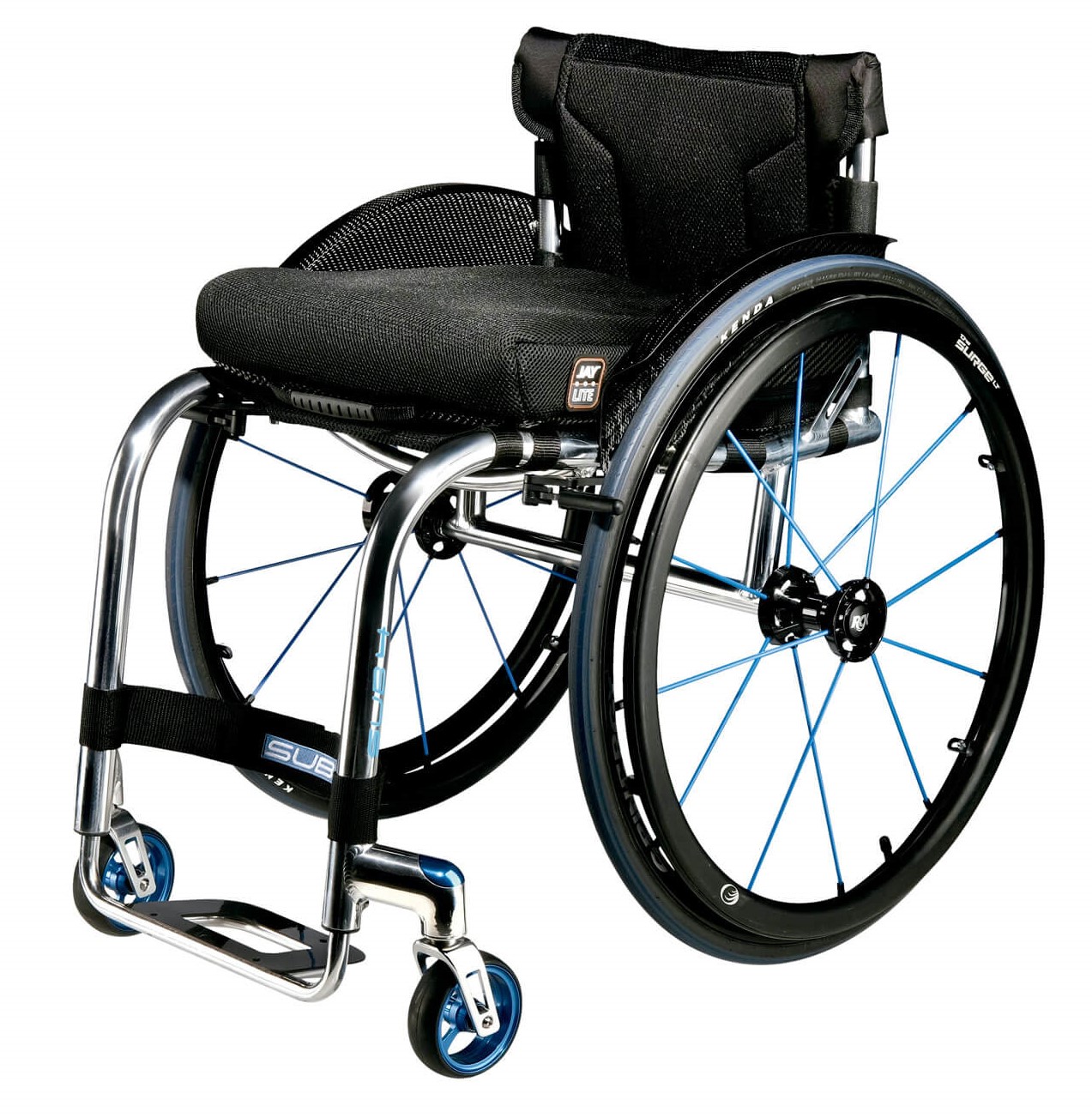
wheelchair types: active user wheelchair

Active user wheelchairs are used by people who often use their wheelchairs for all their mobility. Active user wheelchairs are configured to be efficient to propel by the wheelchair user themselves. They are typically lighter weight than standard wheelchairs and have more weight distributed over the rear wheels. The front wheels (casters) of an active user chair are often smaller than standard wheelchairs. This helps to reduce rolling resistance and make the chair easier to turn. Active user wheelchairs are configured very precisely for each person. They therefore have many size and configuration options to tailor the wheelchair to each person and the way that they use the wheelchair.


Powered Wheelchair (Powerchairs)
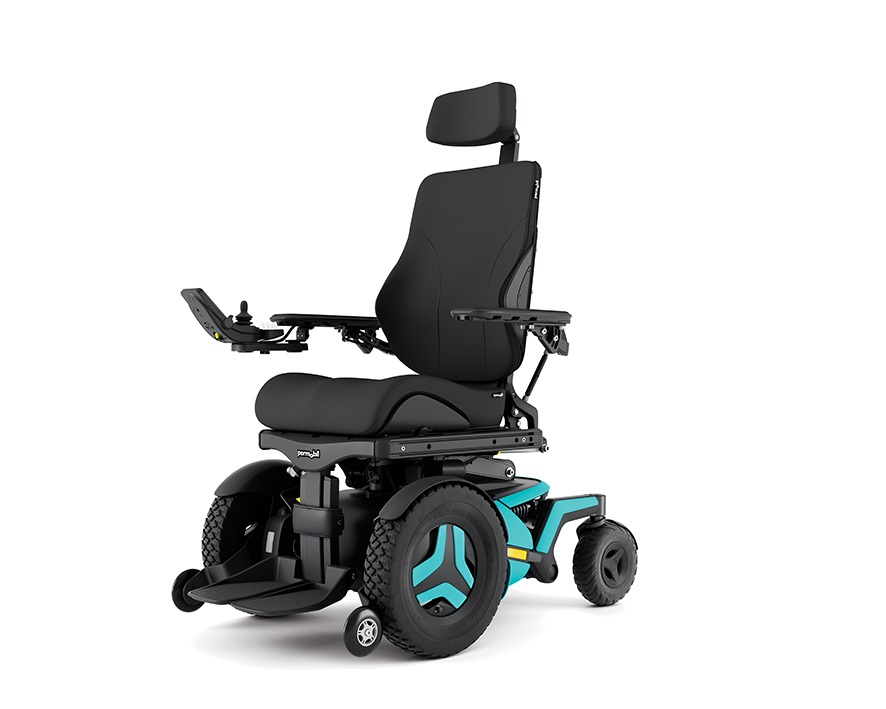
wheelchair types: powered wheelchair

Powerchairs are typically used by people who lack sufficient arm movement or strength to propel a manual wheelchair or are limited by distance or terrain. Powerchairs have electric motors powered by batteries. Control of the motors is usually via a joystick on the armrest, however other parts of the body can be used as well.  Powerchairs enable people to mobilise with very minimal effort. Basic powerchairs are used indoors only and will have a small turning circle to cope with doorways and small spaces. Larger powerchairs enable outdoor use as well and will cope with hills, rougher terrain and have larger battery capacity. Some powerchairs are designed for outdoor use only and will cope with off-road terrain.


Tilt in Space Wheelchair
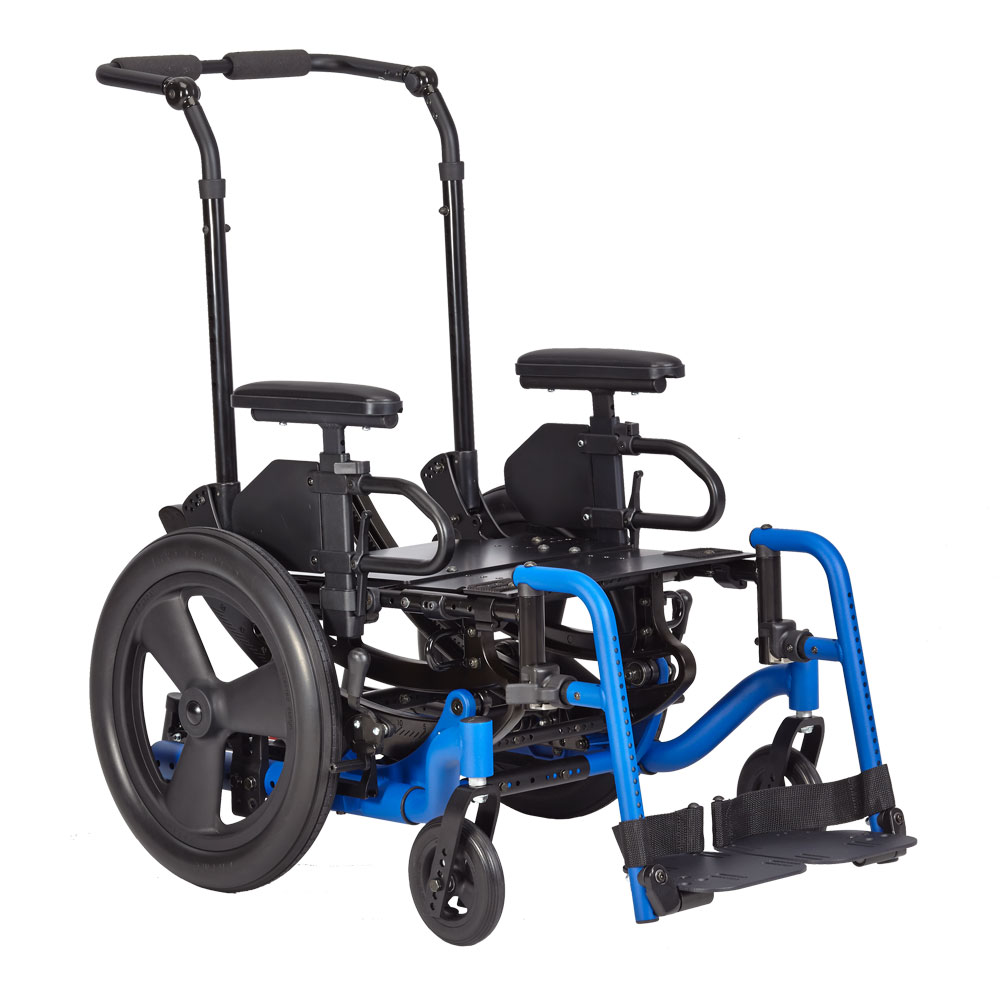
wheelchair types: tilt-in-space

Tilt in Space tips the seating of the wheelchair backwards (imagine tipping a dining chair onto its back legs) and allows gravity to ‘push’ the upper body of the wheelchair user against the backrest of the wheelchair. This enables the user to maintain a sitting position, but with reduced muscle control. Tilt in space also helps with pressure relief by re-distributing weight bearing from the cushion to the backrest. For users using a hoist to transfer to their wheelchair, tilt in space can make this transfer easier, allowing the angle of the seating to match that of the user in their hoisted position. For other users, tilt in space enables them to adjust their own position, using gravity to assist them slide back over the cushion.


Bariatric Wheelchair
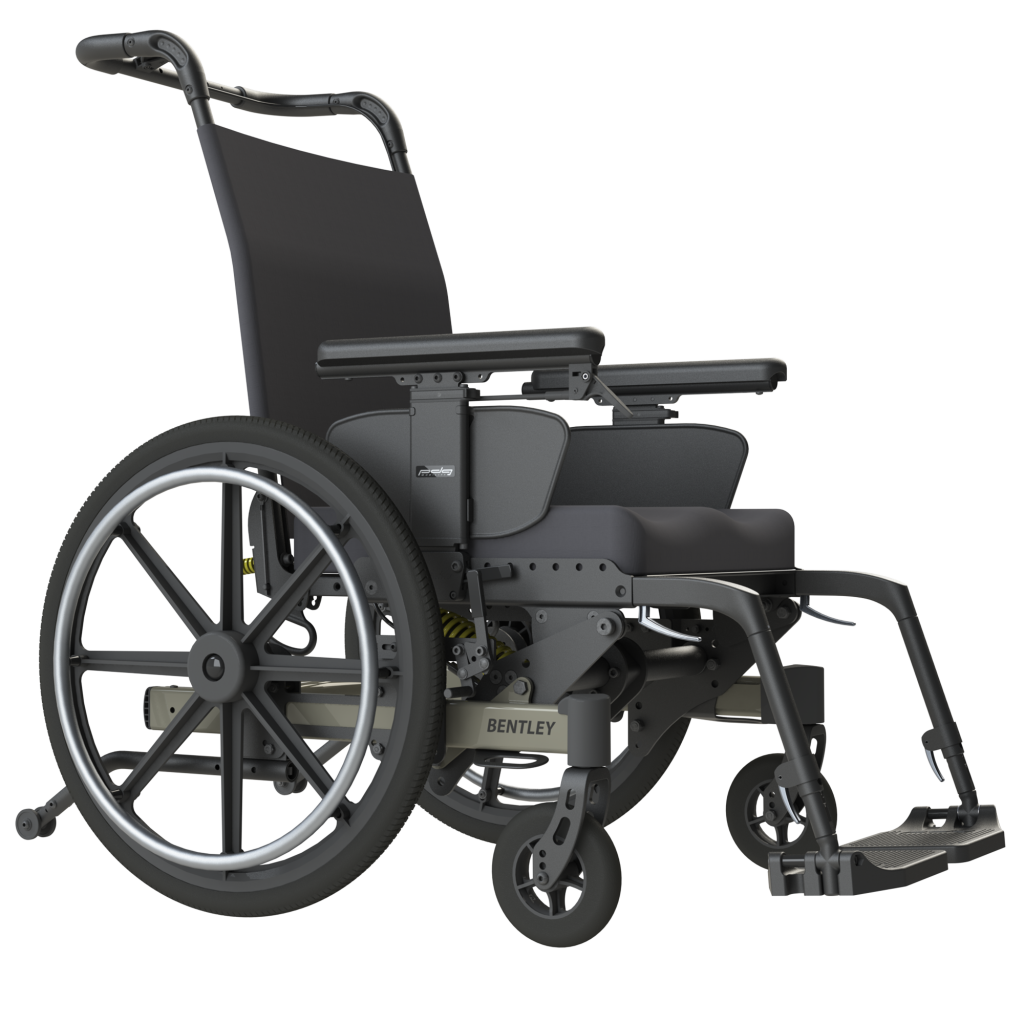
wheelchair types: bariatric

Obesity is defined by Body Mass Index (BMI) above 30. Those with a BMI above 40 are considered bariatric. Specific wheelchairs, both manual and powered, are available for this weight range. They will often look like other wheelchairs but have different construction materials or design that provides greater strength. They will have a size range that is larger than other wheelchairs.


Which wheelchair type do you need?

At Silver Fern Therapy, we can arrange a wheelchair assessment to help you find the best wheelchair type for you. We’ll assess your history, your environment, and your wheelchair needs to help you find the right wheelchair. Contact us for more information.



Affiliations


Call us today on 02921 660346